How to Start a Private Label Boxing Glove Brand
Starting a private label boxing glove brand can be a practical way to enter the combat sports market without investing in your own manufacturing facility. With an experienced OEM manufacturer, a sports brand can develop boxing gloves under its own name and specify the materials, colors, logo, sizing, construction, labels, and packaging.
However, building a private label product involves more than adding a logo to an existing glove. The product needs to be developed around your target market, price range, performance requirements, and brand identity.
From the first product concept to sampling, manufacturing, quality control, packaging, and export, each stage plays a role in the final product. Here is a practical step-by-step guide to starting a private label boxing glove brand.
1. Define Your Target Market
Start by deciding who your boxing gloves are designed for. Your customers may include boxing gyms, amateur boxers, professional fighters, fitness users, martial artists, or general sports consumers.
Your target market will influence the type of glove, material, weight, design, padding, price point, and packaging you choose.
For example, a premium boxing brand may focus on genuine leather gloves and detailed finishing, while a fitness-focused brand may prefer durable synthetic leather with a more accessible price.
Having a clear target customer makes it easier to develop a product that has a specific purpose rather than trying to make one glove suitable for everyone.
2. Choose the Right Boxing Glove Type
Before contacting a manufacturer, determine what type of boxing glove you want to develop.
Common categories include:
• Training boxing gloves
• Sparring gloves
• Professional fight gloves
• Competition-style gloves
Each type can have different requirements for padding, wrist support, construction, and available weights.
For a new brand, it can be more practical to begin with a focused product range. You can introduce additional models and weights as your brand grows.
3. Select the Material
Material has a direct effect on the glove's appearance, feel, durability, and cost.
Genuine leather is often chosen for premium boxing gloves because of its natural feel and durability. Synthetic leather can provide a practical alternative for brands seeking consistent production and a more accessible price point.
Other components also need consideration, including the inner lining, padding, hook-and-loop closure, stitching materials, and other construction details.
Discuss these specifications with your OEM manufacturer so the selected materials are suitable for the intended use and target price.
4. Develop Your Custom Glove Specifications
Private label manufacturing allows you to develop a glove around your own brand requirements rather than simply purchasing a standard product.
Depending on the manufacturer and model, customization can include:
• Brand logo and artwork
• Glove colors and color combinations
• Material selection
• Glove weight and sizing
• Wrist closure
• Padding configuration
• Stitching details
• Printed graphics
• Woven or printed labels
• Individual packaging
It is useful to prepare your logo and product requirements clearly before sampling. The more precise the specifications, the easier it is for the manufacturer to turn your concept into a production-ready glove.
5. Work With an OEM Manufacturer to Develop the Sample
This is where an experienced OEM manufacturer becomes an important part of the process.
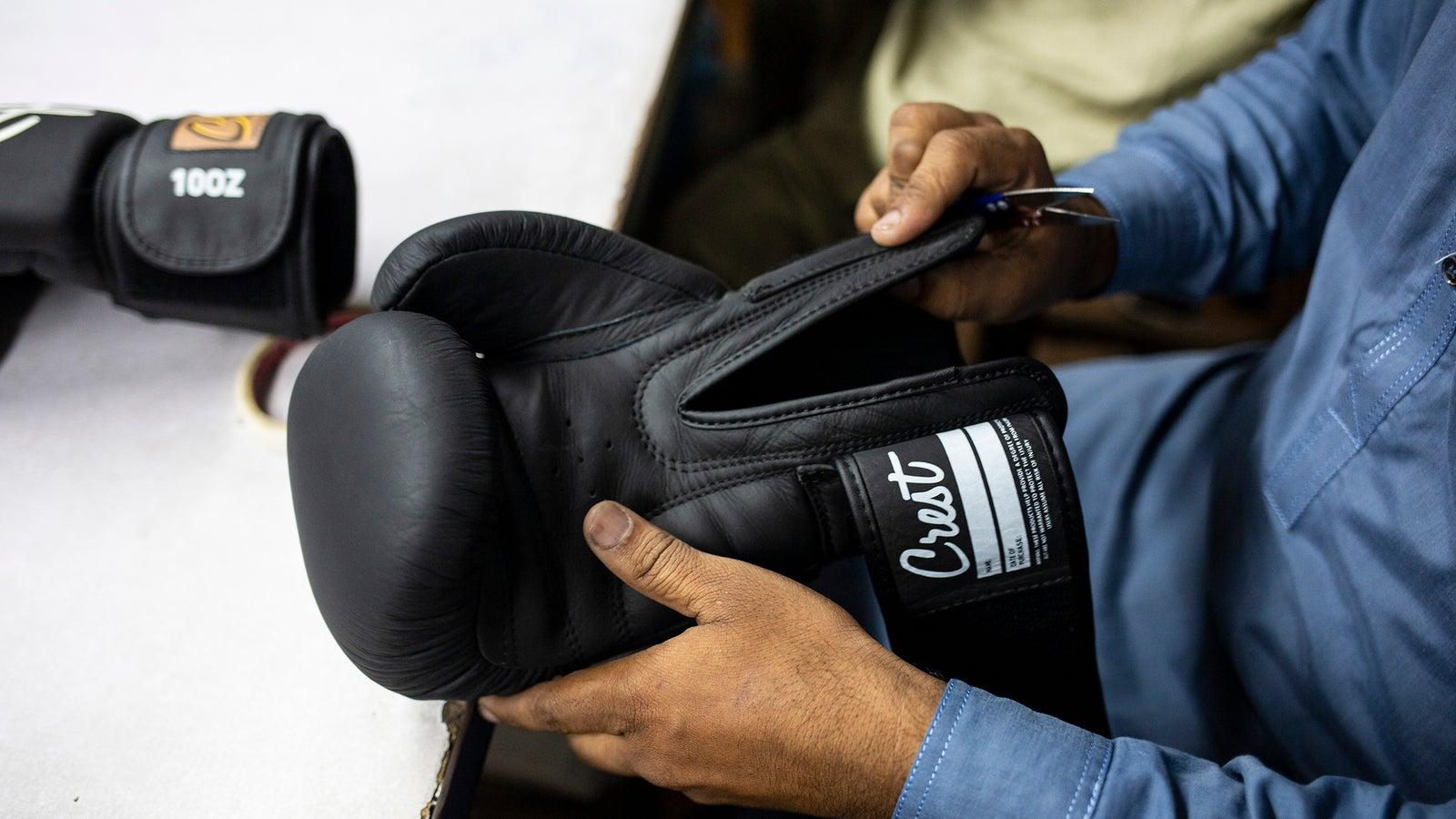
The manufacturer takes your product requirements and turns them into a physical prototype or sample. Materials, colors, logo placement, construction details, sizing, and other specifications can be reviewed during this stage.
The sample gives you the opportunity to evaluate the actual product before committing to bulk production.
If adjustments are required, the specifications can be revised and the sample updated before final approval.
An approved sample should then be kept as a reference for bulk production.
6. Understand How Private Label Boxing Gloves Are Manufactured
Once the product specifications and sample are approved, the manufacturing process can move into bulk production.
While the exact workflow varies by glove model, OEM boxing glove production generally involves several stages:
Material Preparation
The selected outer materials, lining materials, padding components, and other required materials are prepared according to the approved specifications.
Cutting and Component Preparation
Material is cut according to the required glove patterns and dimensions. Individual components are prepared for assembly.
Padding and Construction
The required padding is prepared and positioned within the glove structure. The hand compartment and other components are assembled according to the approved design.
Stitching and Assembly
The glove components are stitched and assembled. Attention to stitching quality, alignment, and construction is important because these details affect both appearance and durability.
Branding Application
The approved logo and other branding elements are applied using the selected branding method. Placement, size, and appearance should match the approved sample.
Finishing
After assembly, the gloves go through finishing work to check their overall appearance, shape, edges, stitching, and other visible details.
Quality Control
Finished gloves are inspected against the agreed specifications. Depending on the order, checks can include material, stitching, dimensions, weight, logo placement, finishing, and packaging.
This manufacturing process is one of the key differences between working with an OEM manufacturer and simply purchasing generic gloves for resale.
7. Confirm MOQ and Pricing
Minimum order quantity, or MOQ, is an important consideration when launching a new brand.
Manufacturing requirements can vary depending on the glove model, materials, customization, packaging, and production setup. Some manufacturers may be able to support smaller initial orders, while larger production runs can provide better unit economics.
When comparing quotations, do not look only at the glove price. Confirm what is included in the quotation, such as logo customization, labels, packaging, sampling, and shipping.
For larger orders, it is also worth asking about volume-based pricing.
8. Plan Your Private Label Packaging
Packaging should be considered part of the product development process.
Depending on your market and sales channel, you may need individual glove boxes, printed packaging, hang tags, labels, poly bags, or other branded materials.
If you want custom packaging, confirm its MOQ and production timeline early. Printed packaging may have a separate minimum order quantity from the gloves themselves.
Good packaging should represent your brand professionally without adding unnecessary costs to the product.
9. Establish Clear Quality Standards
Quality expectations should be agreed upon before bulk manufacturing begins.
A product specification sheet can include:
• Approved material
• Color references
• Glove weight
• Size requirements
• Padding specifications
• Logo artwork and placement
• Stitching requirements
• Closure system
• Labels
• Packaging
The approved sample can serve as an important production reference.
Before placing the order, ask the manufacturer how quality control is handled and what aspects of the finished gloves are inspected. Clear specifications help reduce misunderstandings and maintain consistency across production.
10. Plan Production and International Shipping
Production time depends on factors such as order quantity, product design, customization, material availability, packaging, and factory workload.
Before confirming your order, ask for an estimated production lead time and clarify when the production period begins.
International shipping should also be considered during the planning stage. Product cost, shipping charges, customs responsibilities, and delivery terms can vary depending on the destination and agreed Incoterms.
Planning logistics early helps ensure that finished products can move from the factory to your warehouse or distribution point without unnecessary delays.
11. Start With a Focused Product Range
A new boxing brand does not necessarily need a large collection from the beginning.
Starting with one or two well-developed glove models can make it easier to test your product concept, pricing, branding, and customer response.
Once you understand which products perform best, you can expand into additional weights, colors, materials, or related boxing and MMA equipment.
This approach can also make inventory planning more manageable during the early stages of your business.
Choosing the Right OEM Boxing Glove Manufacturer
The manufacturing partner you choose can have a major impact on the consistency and development of your private label products.
Look for an OEM manufacturer that can:
• Understand your product specifications
• Develop customized samples
• Offer suitable material options
• Handle logo and branding requirements
• Support your required MOQ
• Maintain consistent production quality
• Provide appropriate packaging options
• Communicate clearly about production and shipping
Price is important, but it should not be the only factor. A lower initial quotation may not be the best option if the manufacturer cannot maintain the required quality or specifications during bulk production.
Private Label Boxing Glove Manufacturing With Mast Baba Sports
Mast Baba Sports is an OEM and private label manufacturer of boxing and MMA equipment based in Sialkot, Pakistan. We work with brands, importers, wholesalers, distributors, gyms, and sports businesses developing customized combat sports products.
Our manufacturing support can include product specifications, material selection, custom colors, logo branding, sizing, labels, and packaging, depending on the product requirements.
For private label boxing gloves, the process starts with understanding the buyer's requirements and developing the product accordingly. Samples can be reviewed and adjusted before bulk production, while approved specifications and samples provide a reference for manufacturing and quality control.
The objective is not simply to supply gloves with a customer's logo. It is to develop a product that fits the brand's intended market and can be reproduced consistently for future orders.
Final Thoughts
Starting a private label boxing glove brand requires planning at both the brand and manufacturing levels. Choosing the right glove type, material, specifications, branding, packaging, MOQ, and quality standards can make a significant difference to the final product.
An experienced OEM manufacturer can handle the manufacturing side—from sample development and material preparation to stitching, branding, finishing, quality control, and packaging—while the brand owner focuses on market positioning, sales, and customer development.
If you are planning to launch your own boxing glove brand, begin with a clear product concept, develop a detailed specification, approve a physical sample, and choose a manufacturing partner that can support your requirements as your brand grows.