How to Choose the Right Boxing Gloves for Your Brand
Choosing boxing gloves for a sports brand is not simply a matter of picking a color and adding a logo. The right glove needs to match the market you are selling to, the type of training it will be used for, and the quality level your customers expect.
For importers, wholesalers, gyms, and private-label brands, working with the right manufacturer is also important. Materials, padding, stitching, sizing, branding, and production requirements can all affect the final product.
If you are developing your own boxing glove line, here are the main points to consider before placing an order.
1. Start With Your Target Market
Before discussing materials or designs with a manufacturer, decide who the gloves are for.
A beginner-focused product may require a different construction from gloves intended for experienced boxers or regular gym training. Your target market can also influence the price range, materials, available weights, and overall appearance.
If you are building a private-label range, it is useful to define the product's intended use before finalizing the design.
2. Choose the Right Type of Boxing Glove
Boxing gloves are available for different training purposes. Training gloves are commonly used for general bag work, pad work, and gym sessions, while sparring gloves are designed with protection and impact absorption in mind.
For a new brand, it may make sense to begin with one or two versatile models rather than offering too many variations at once. A manufacturer can then help you adjust the construction according to your intended use.
3. Consider the Glove Weight
Boxing gloves are normally specified by weight in ounces, such as 8 oz, 10 oz, 12 oz, 14 oz, and 16 oz.
The appropriate weight depends on the intended use and the requirements of your market. Some customers may prefer lighter gloves for certain training or competition applications, while heavier gloves are commonly used for training and sparring.
When developing a private-label product, clearly communicate the required weight to the manufacturer and confirm the finished sample before starting bulk production.
4. Select the Right Material
Material has a direct effect on the appearance, feel, durability, and price of a boxing glove.
Genuine leather is often selected for premium products because of its natural feel and durability when properly manufactured and maintained. Synthetic leather can provide a practical alternative for brands looking for consistent production and a more accessible price point.
Your choice should be based on your target market, expected usage, product positioning, and budget rather than simply choosing the most expensive material.
5. Look at the Padding and Construction
The foam inside a boxing glove plays an important role in impact absorption and hand protection.
However, padding should not be considered separately from the rest of the construction. The shape of the glove, foam density, hand compartment, stitching, wrist support, and overall balance all contribute to how the finished glove feels.
When reviewing samples, pay attention to the shape and feel of the glove rather than judging it only from photographs.
6. Choose the Wrist Closure
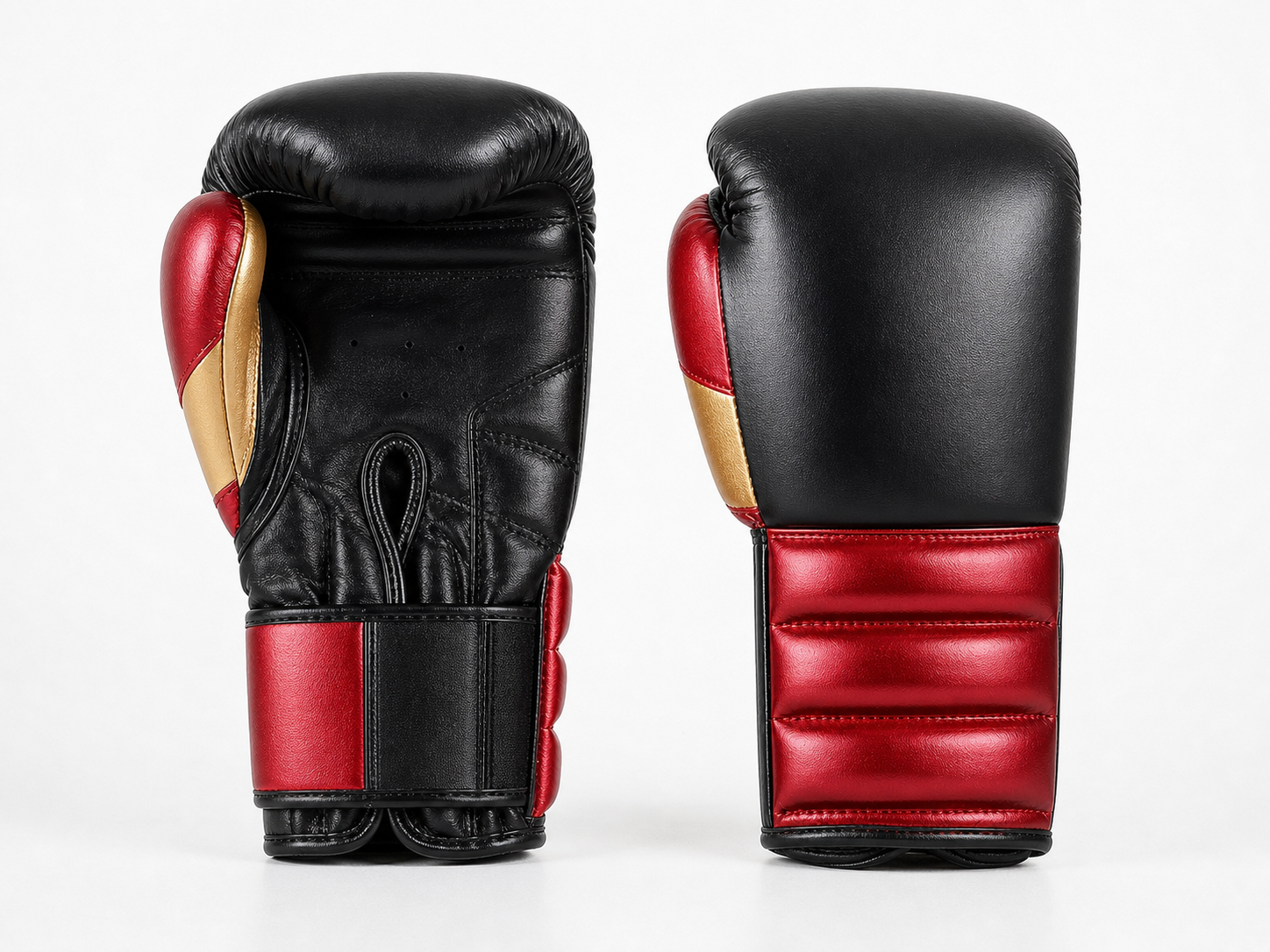
Different boxing gloves can use different closure systems, with hook-and-loop and lace-up designs being common options.
Hook-and-loop gloves are convenient for regular training because they can be put on and removed quickly. Lace-up gloves provide a more traditional fit and are often selected for specific training or competition requirements.
For a private-label range, the closure should match both the intended use and the type of customer you are targeting.
7. Check Stitching and Overall Finish
A good-looking glove can still have problems if the construction is inconsistent.
Look closely at the stitching around high-stress areas, the wrist, thumb attachment, seams, and logo application. Check whether the pair is symmetrical and whether the finishing is clean.
For bulk orders, quality control should not depend only on the first approved sample. Production inspection is important to maintain consistency across the full order.
8. Build Your Brand Into the Design
Private-label boxing gloves give brands much more flexibility than simply buying an existing model.
Depending on the manufacturer's capabilities, you may be able to customize:
• Logo placement
• Colors
• Materials
• Glove weight
• Wrist closure
• Labels
• Packaging
• Branding details
It is useful to provide clear artwork, preferred colors, and any technical requirements before sampling. This gives the manufacturer enough information to produce a sample that is closer to your intended final product.
9. Always Review a Sample Before Bulk Production
A sample gives you the opportunity to check details that are difficult to judge from pictures.
You can review the material, padding, stitching, sizing, logo placement, colors, wrist support, and overall finish before committing to a larger quantity.
For brands developing custom boxing gloves, working with a manufacturer such as Mast Baba Sports can make the sampling process more straightforward when material, branding, and construction requirements need to be discussed before bulk production.
If changes are needed, communicate them clearly and have the updated specifications confirmed before production begins.
10. Ask About MOQ, Production Time and Shipping
Your sourcing decision should also include the practical side of the order.
Ask the manufacturer about:
• Minimum order quantity
• Sample availability
• Production lead time
• Available materials
• Customization options
• Packaging
• Quality control
• Shipping methods
• Export documentation
These details can make a significant difference to your purchasing plan, especially when you are launching a new product line.
11. Work With a Manufacturer That Understands Custom Orders
For a private-label brand, manufacturing is more than putting a logo on an existing glove.
The manufacturer should be able to understand your specifications, discuss suitable materials and construction, produce samples, make required adjustments, and maintain consistency during bulk production.
Clear communication from the beginning can save time and reduce unnecessary changes later in the order.
Build Your Boxing Glove Range With a Clear Plan
The right boxing glove for your brand depends on several factors: intended use, target customer, material, glove weight, padding, construction, closure, branding, and production requirements.
Taking time to define these points before ordering can make the sourcing process much easier and help you develop a product that fits your market.
At Mast Baba Sports, we manufacture boxing gloves for brands, importers, wholesalers, distributors, and gyms looking for OEM and private-label production. Custom materials, colors, logos, labels, packaging, and other specifications can be discussed according to the product requirements.
If you are developing a new boxing glove line or looking to manufacture an existing design, you can share your specifications and branding requirements with our team for review.